
Owning property via a trust in Cambodia: How does it work?
Trust services are special financial, legal, and management solutions that help protect, manage, and distribute assets for individuals, families, and organisations. In Cambodia, a…
ค้นหาตามอสังหาฯ
ค้นหาตามพื้นที่
ค้นหาตามพื้นที่
Trust services are special financial, legal, and management solutions that help protect, manage, and distribute assets for individuals, families, and organisations. In Cambodia, a…
Trust services are special financial, legal, and management solutions that help protect, manage, and distribute assets for individuals, families, and organisations. In Cambodia, a property trust allows you to transfer ownership of a property to a trustee, who will manage it on behalf of the beneficiary or beneficiaries.
The introduction of the Law on Trusts in 2019 marked a significant shift, enabling foreigners to invest in land through trust structures. The law allows foreign investors to appoint a licensed trustee to hold legal title to the property while the investor retains beneficial ownership. This keeps the arrangement compliant with Cambodian law and provides a transparent, secure investment mechanism.
The sector has grown quickly since the Trust Regulator was established in 2021. As of the second quarter of 2026, 1,997 trusts had been registered with total assets of approximately $2.691 billion, up from just 17 trusts worth $156 million in 2021. Real estate is the single largest category, with 1,029 real estate trusts, more than half of all registered trusts.
This growth comes against a more challenging economic backdrop. The Royal Government revised its 2026 growth forecast to 4.2 percent, down from 5 percent, citing higher energy costs and border tensions with Thailand, and expects growth to recover to 5 percent in 2027.
A property trust offers foreign investors a practical solution for investing in and owning property in Cambodia. By appointing a licensed trust company, investors can hold and manage their assets under a commercial trust. The trust company holds the property on the client's behalf and must manage it only as set out in the trust deed, which is registered with the Trust Regulator.
This arrangement provides a secure and legally compliant way for foreigners to invest in landed property, such as land, villas and shophouses, while the trust company oversees the management and protection of the asset.
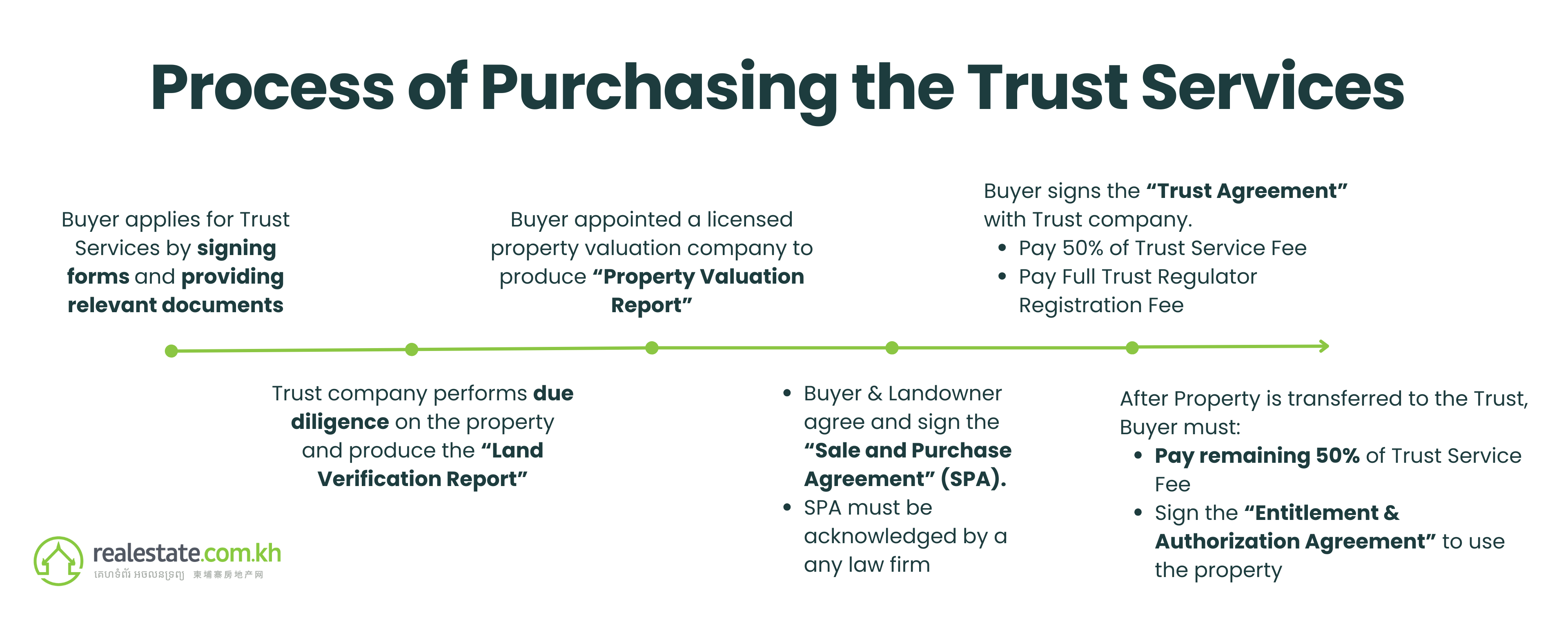
In Step 1 of the property purchase process, the required documents vary depending on whether the buyer is an individual or a business.
For individuals:
For businesses:
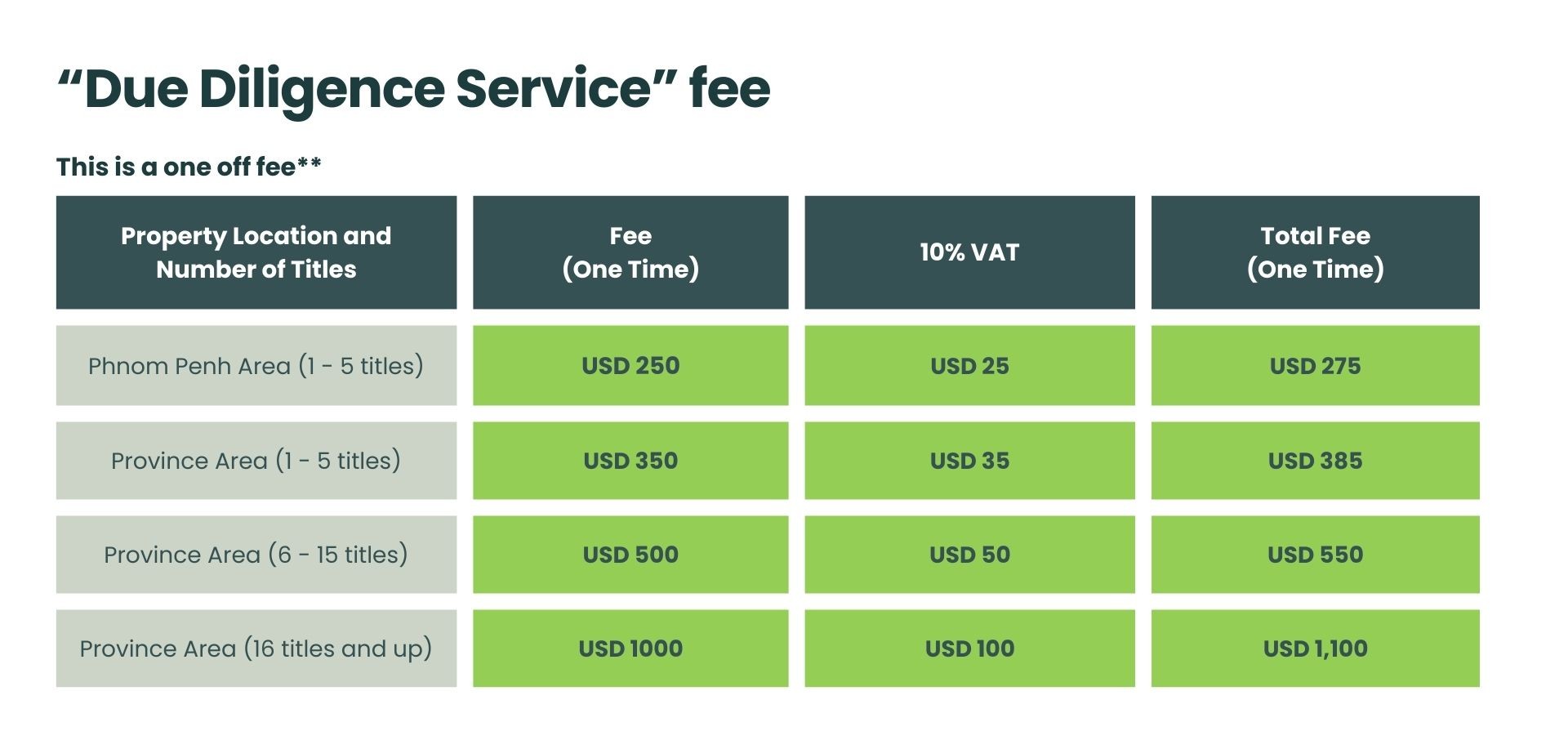
1. Due Diligence Service (one-time fee)
The Due Diligence Service is an essential step provided to clients before property acquisition. It ensures that the property is in good legal and physical condition and is not located within any restricted or non-compliant zoning area.
It includes a thorough examination of the property's ownership history, checks for any existing disputes that may affect the transaction, verification of the property's legal status, and confirmation that all relevant permits, tax payments and documentation are up to date.
Note: This is a one-time fee paid only at the start of the process.
2. Ongoing Trustee Fee
This fee is paid regularly, usually monthly or annually. It covers continuous services such as holding the title, administration and, where agreed, property management and maintenance, so the property is well managed for as long as the trust lasts.
Fees vary by provider and by the value and complexity of the property, so it is worth comparing written quotes before signing.
Note: This is a one-time fee that you pay only at the start of the process.
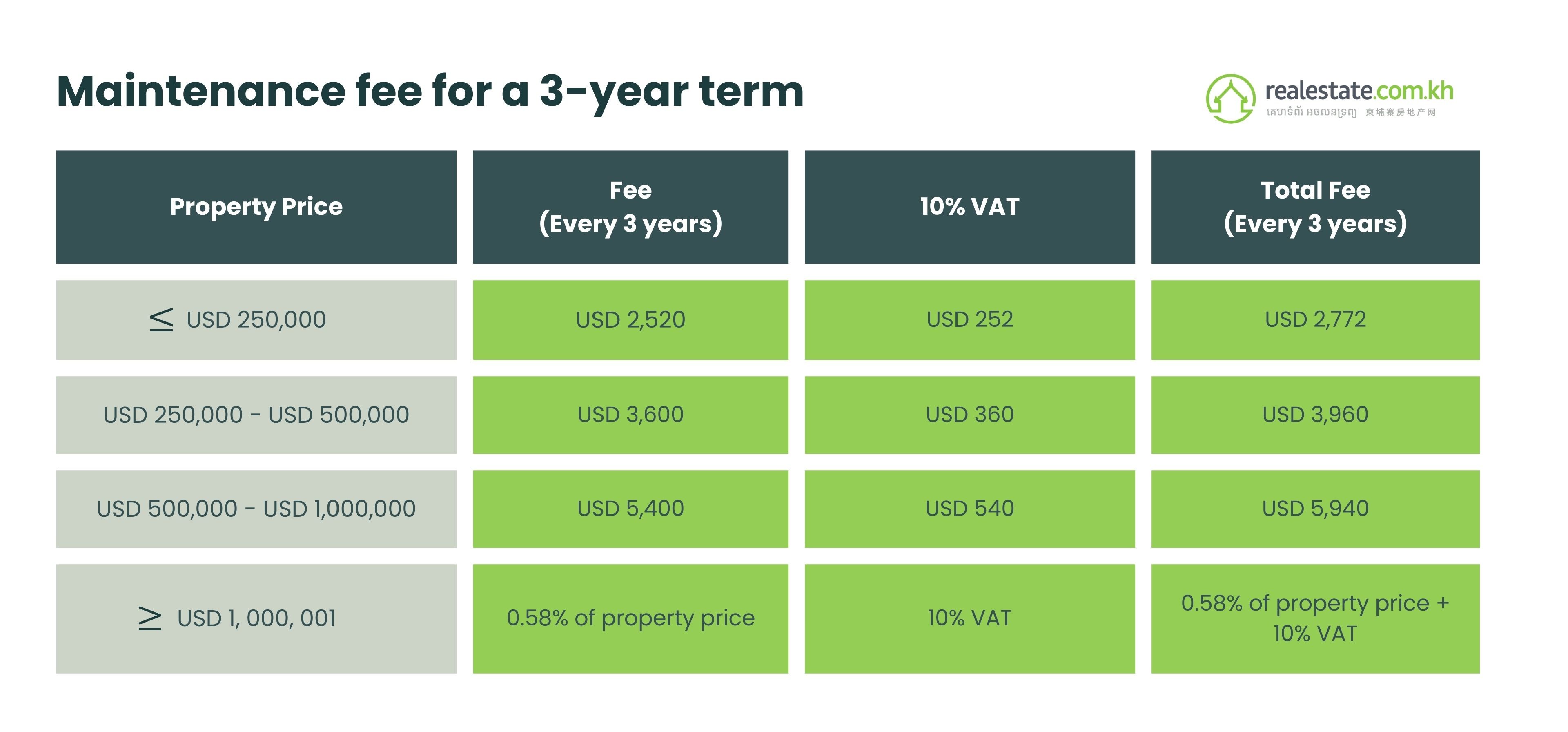
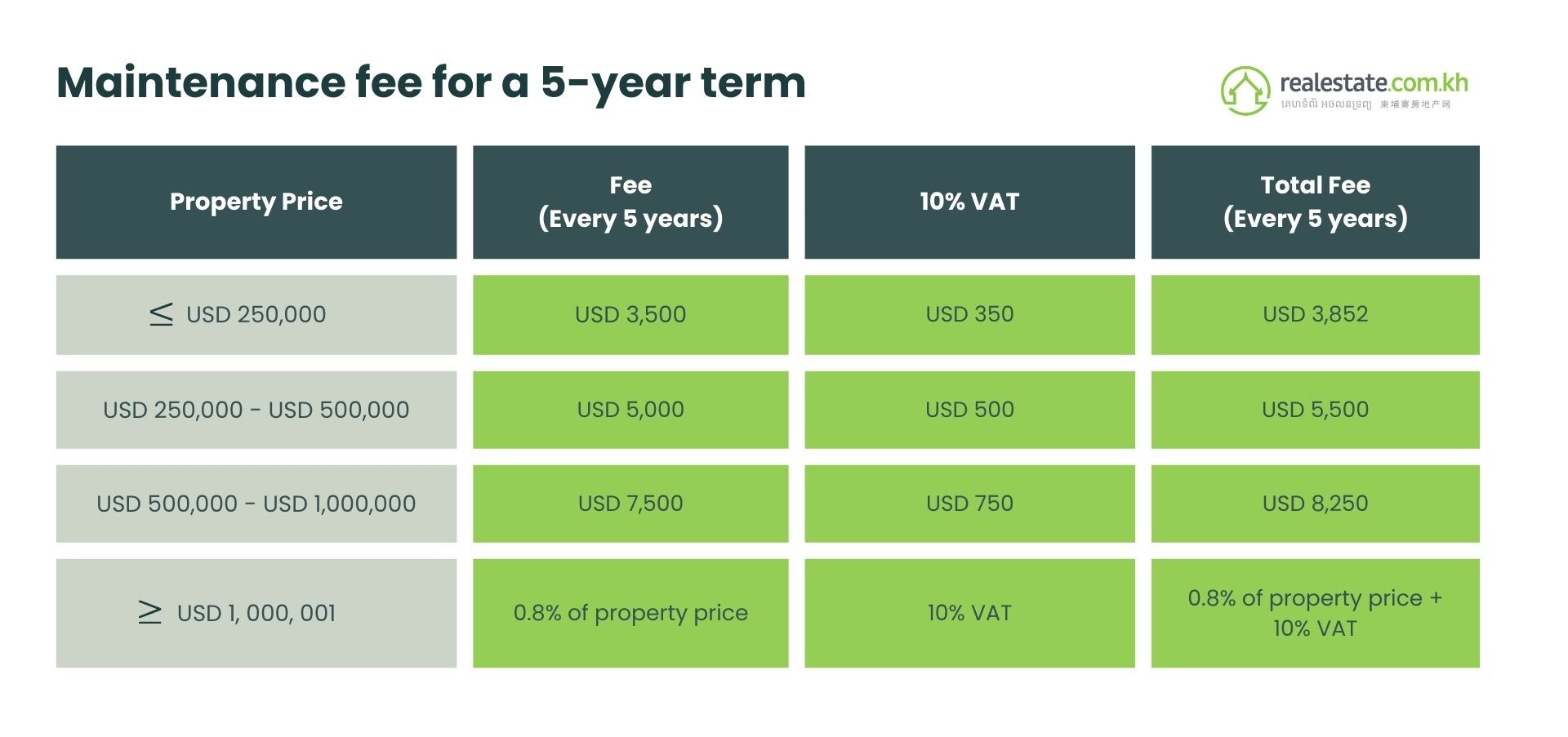
This is an ongoing fee that is paid regularly, usually monthly or annually, to cover continuous services such as property management, maintenance, or other long-term costs associated with the property. This fee ensures that the property is well-managed and maintained throughout the entire process.
In Cambodia, establishing a trust involves selecting a qualified trustee registered with the Trust Regulator and holding a valid trustee licence. Under the Law on Trusts 2019, trustees can be either legal entities or independent individual trustees.
As of mid-2026, the Trust Regulator has licensed or recognised 18 trustee companies, 74 individual trustees and 30 commercial banks providing escrow and safekeeping services. It has also approved 19 valuation companies and 15 audit firms that support the sector.
The Trust Establishment and Registration Process involves a series of steps to create and officially register a trust. It includes appointing a trust company, completing the necessary documentation and transferring the land title into the trustee's name. The trust must then be registered with the Trust Regulator within three months of signing the trust deed.
Once registered, the Trust Regulator issues a certificate confirming the property as a trust asset protected under Cambodian law.
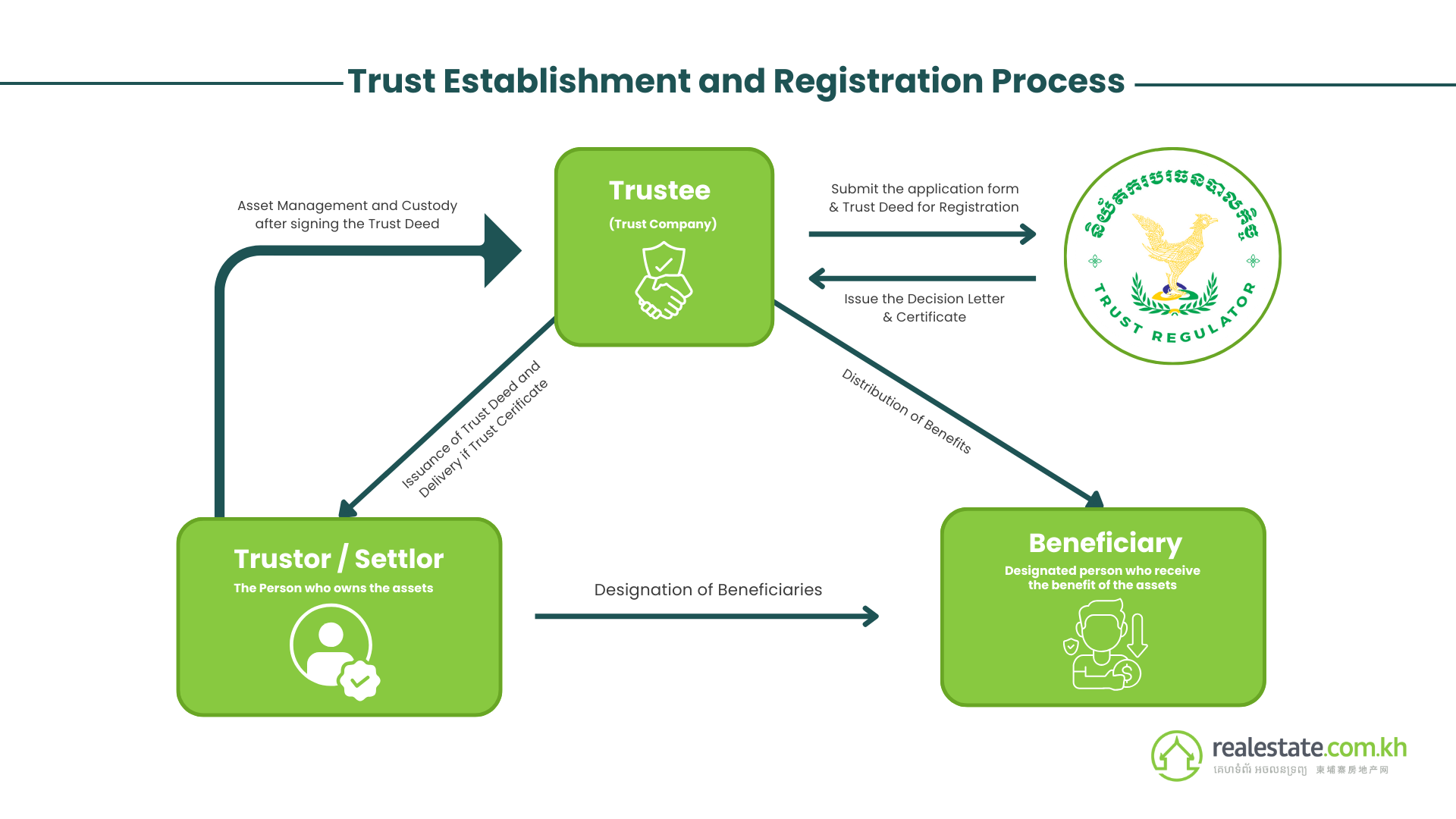
Cambodia's Law on Trusts has reshaped the investment landscape by giving foreigners a legal framework to participate in real estate. By holding property through a licensed trustee while retaining beneficial ownership, foreign investors can enter the market on firm legal ground.
With nearly $2.7 billion now held in almost 2,000 registered trusts, the sector has matured quickly. At the Trust Forum 2026, the government called for higher standards in compliance and investor protection, and for new trust products beyond real estate. As more investors recognise these benefits, trusts are set to remain a key route into Cambodia's property market.
To learn more about Cambodia's Trust Law, contact our experts:
📞 +855 92 92 1000
Not directly. Land ownership is reserved for Cambodian citizens and Cambodian-majority companies. Foreigners can own condominium units under strata title (above the ground floor), or invest in landed property such as land, villas and shophouses through a registered trust.
Yes. Trusts are governed by the Law on Trusts 2019 and supervised by the Trust Regulator under the Non-Bank Financial Services Authority. Every trust must be registered with the regulator.
The trustee holds legal title and is recorded as the owner. You, as the beneficiary, keep the economic benefit, including rental income and sale proceeds.
The trust deed sets out how the property can be sold, transferred or passed to heirs. Agree these terms with your trustee before signing, as the trustee can only act as the deed allows.
The trust must be registered with the Trust Regulator within three months of signing the trust deed. Timelines for due diligence and title transfer vary by property.
Ask to see the trustee's Trust Regulator licence and confirm it with the regulator. As of mid-2026, 18 trustee companies and 74 individual trustees are licensed or recognised.
Expect a one-time due diligence fee at the start and an ongoing trustee fee, paid monthly or annually. Fees depend on the provider and the value of the property.
Yes. Businesses can set up a trust by providing company documents such as the Memorandum and Articles of Association, tax certificates and an authorisation letter.
ตัวเลขเหล่านี้มาจากประกาศจริงที่อัปเดตทุกวัน เริ่มค้นหาได้ที่นี่
ค้นหาบ้านทั้งหมด › How Long Does It Take to Buy Property in Cambodia? A Complete Timeline
 Overview Of Cambodian Real Estate Regulation Updates 2024
 15 Reasons to Relocate to Phnom Penh: A Guide to Living in Cambodia's Capital