Cambodia is making it easier for international buyers and investors to handle real estate transactions with two big updates in digital payments. On November 12, during the Singapore FinTech Festival 2025, the National Bank of Cambodia (NBC) launched Phase 1 of a cross-border QR payment system with Singapore. At the same time, NBC also signed a key agreement with China's TenPay Global to link payments between the two countries.
This expansion introduces a smoother, cash-free payment solution for daily expenses and significant transactions alike, benefiting expats, foreign investors, and local developers within Cambodia's fast-growing economy.
ADDITIONAL READING: How Much Does a Property Cost in Cambodia?
Easier Payments for Cambodians in Singapore
In the first phase, called "Cambodia Scans QR Codes in Singapore," Cambodian travelers and business people can now pay in Khmer Riel (KHR) by scanning QR codes at shops and services across Singapore. No need for cash, credit cards, or currency swaps, just use apps like Bakong or ACLEDA Super App linked to your local bank account.

(H.E. Dr. Chea Serey, Governor of the National Bank of Cambodia)
This quick, secure setup cuts costs and speeds up transactions. It's great for real estate pros scouting properties or closing deals in Singapore, and it promotes tourism and trade between the two nations. Phase 2, coming soon, will let Singaporeans scan Cambodian QR codes (KHQR) here at home, opening doors for more cross-border property investments.
Banks like ACLEDA and Phillip, along with Singapore's Liquid Group, made this possible. NBC Governor Chea Serey called it a "key move for an inclusive digital economy" that supports growth through better regional ties.
For real estate, this means foreign buyers from Singapore can pay deposits or fees instantly via mobile apps when viewing homes, reducing delays and building trust in deals.
READ MORE: Payment Terms for Buying Properties in Cambodia
New Ties with China for Faster Remittances and Investments
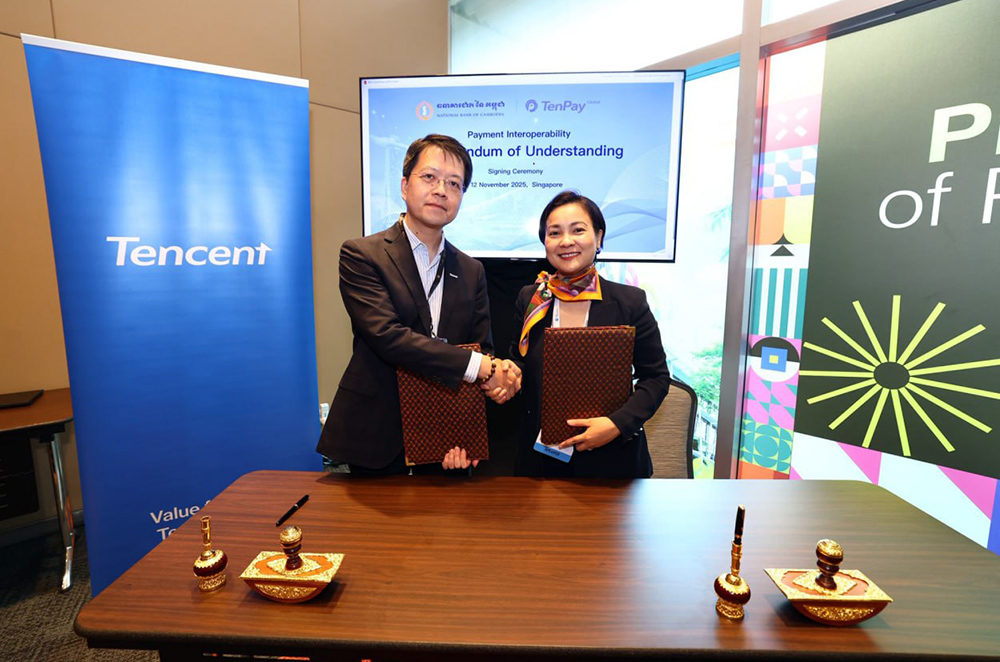
The MOU with TenPay Global (part of Tencent and operator of WeChat Pay) sets up links between Cambodia's Bakong (KHQR) and China's WeChat Pay. The goal is to make cross-border payments for everyday use quicker and cheaper for people and businesses.
This is huge for Cambodia's property sector, where Chinese investors lead in buying condos, hotels, and land. Easier money flows mean faster fund transfers for down payments or construction loans, helping projects across Cambodia. It also boosts financial access, encourages local currency use, and cuts reliance on cash as well, which is ideal for SMEs in real estate services.
Governor Serey said the deal "drives innovation and economic ties with China." Daniel Hong, Vice President of Tencent Financial Technology, added that it builds a "trusted global payment network" for easier commerce.
Why This Matters for Real Estate in Cambodia
Cambodia's digital payment push fits right into its real estate boom. With more seamless QR links to neighbors like Thailand, Vietnam, Laos, Malaysia, Japan, and now Singapore and China, investors can handle overseas funds without hassle. This lowers costs for buyers, speeds up closings, and attracts more foreign capital, thereby increasing demand for property across the country.
Local merchants and property developers also benefit as well, gaining the ability to accept instant payments from international visitors, supporting sales in a market expected to grow 7–10% next year. As Cambodia pushes toward a more connected ASEAN economy, these innovations make property transactions safer, faster, and more seamless.
For tips on using these payments for your next transaction, check out the NBC's Bakong app. Stay connected with realestate.com.kh for more on how digital shifts are shaping Cambodia's property scene.
Sources: National Bank of Cambodia, ACLEDA Bank, AKP News.