
Why Siem Reap Smart City Phase 2 Could Boost Property Investment
Siem Reap is evolving. While many still see it mainly as the gateway to Angkor Wat, the city is now becoming a testing ground for how Cambodia’s future cities could look. Siem Reap…
ค้นหาตามอสังหาฯ
ค้นหาตามพื้นที่
ค้นหาตามพื้นที่
Siem Reap is evolving. While many still see it mainly as the gateway to Angkor Wat, the city is now becoming a testing ground for how Cambodia’s future cities could look. Siem Reap…
Siem Reap is evolving. While many still see it mainly as the gateway to Angkor Wat, the city is now becoming a testing ground for how Cambodia’s future cities could look.
Siem Reap’s Smart City project is not new. The province has already received more than four years of technical support from the Japan International Cooperation Agency (JICA), helping shape a long-term urban development plan.
Following the initial phase, a second phase has now been approved, set to run from September 2026 to August 2028. The transition was formalised during the first Joint Coordination Committee (JCC) meeting between the Siem Reap Provincial Administration and Japan International Cooperation Agency, marking a shift from pilot projects to more structured, long-term implementation.
It is part of a much bigger national vision under Cambodia’s Digital Economy and Society Policy Framework 2021–2035. Beyond infrastructure, the framework emphasises digital governance, data systems, and institutional capacity, areas that are now being actively implemented in Siem Reap.
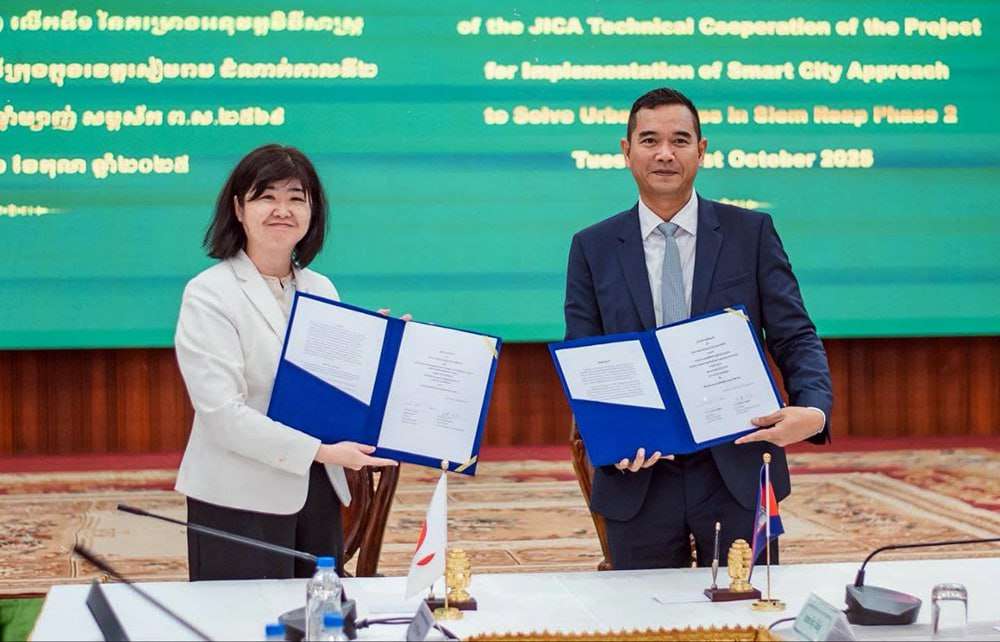
(Siem Reap Provincial Governor Prak Sophorn (R) and JICA Cambodia Senior Representative Miura Yoshiko. Siem Reap Provincial Administration- Source: KhmerTimes)
The first phase officially concluded in May, with the majority of pilot projects completed and already in use. According to project stakeholders, key outcomes included the development of a shared data platform, improved urban environment management, and the introduction of monitoring systems such as illegal parking controls.
Importantly, the project also brought together public institutions, private companies, and academic contributors, ensuring that solutions were practical and grounded in real-world urban challenges.
Initial efforts focused on:
These interventions created a proof of concept that targeted urban upgrades can extend tourist movement beyond concentrated hotspots and unlock the potential of other zones.
READ MORE: Is Siem Reap the Best Place to Retire in Southeast Asia?
This matters for property markets. When foot traffic disperses more evenly across a city, secondary locations begin to gain commercial viability, which means:
Additional Read: How to Get a Visa for Cambodia
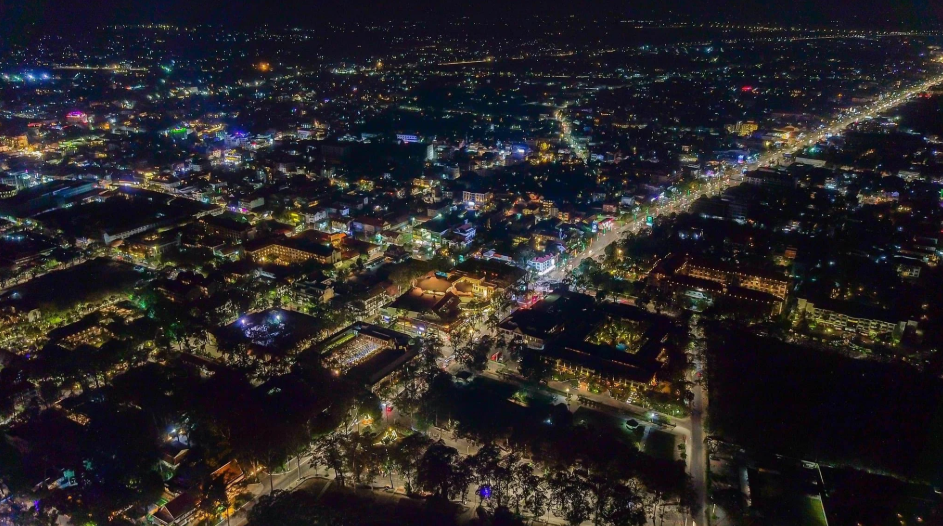
(Source: Khmer Post Asia)
More importantly, Phase 2 represents a shift from testing ideas to scaling them. The focus will include training civil servants, strengthening institutional capacity, and expanding successful pilot solutions into wider areas of the city.
Authorities are now prioritizing digital infrastructure to manage core urban challenges, including:
According to project discussions, eight pilot components are being deployed across Pub Street and the riverbank corridor, ranging from smart traffic systems and digital signage to real-time monitoring and public space activation.
Additional Reading: How Technology is Transforming Cambodia’s Real Estate Market
This aligns with broader regional benchmarks. Across Southeast Asia, cities that adopt smart infrastructure tend to see:
In Siem Reap’s case, the goal is to transform Siem Reap from being just a tourist zone into a connected urban ecosystem.
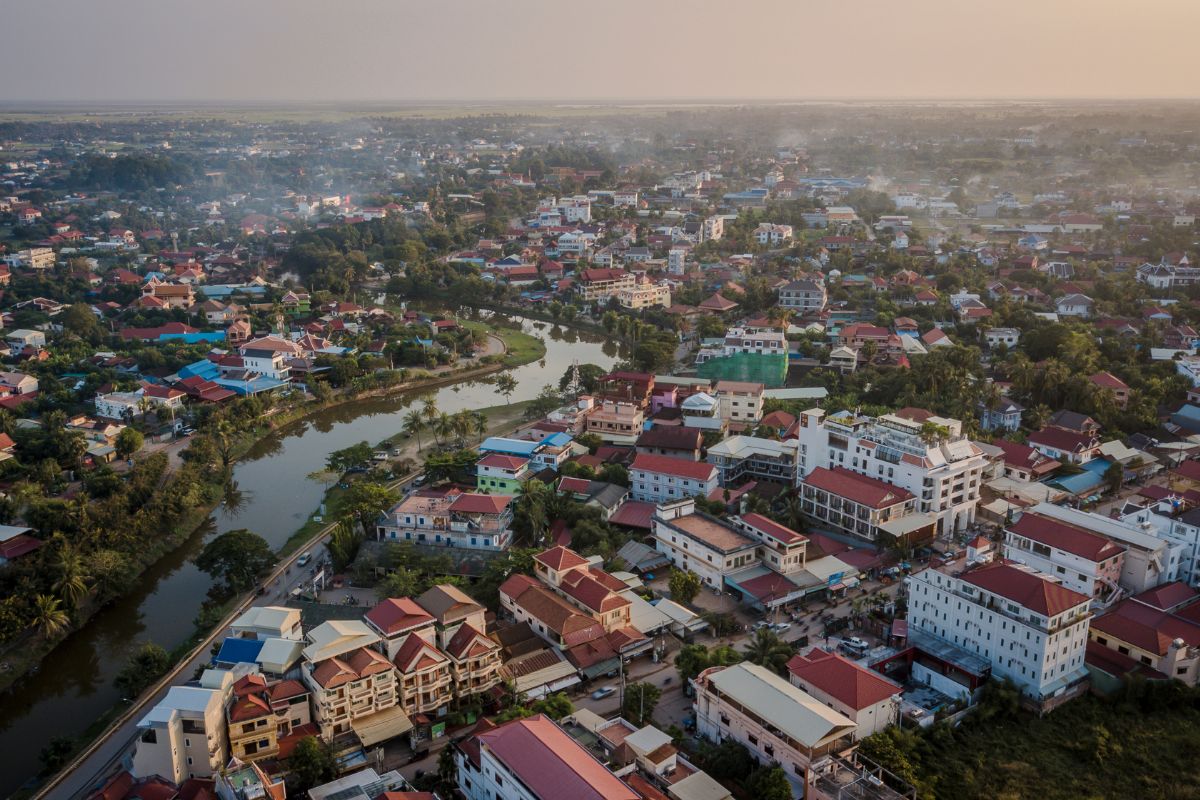
Urban planning and real estate performance are closely linked. As Siem Reap integrates smart systems, several property trends are likely to emerge:
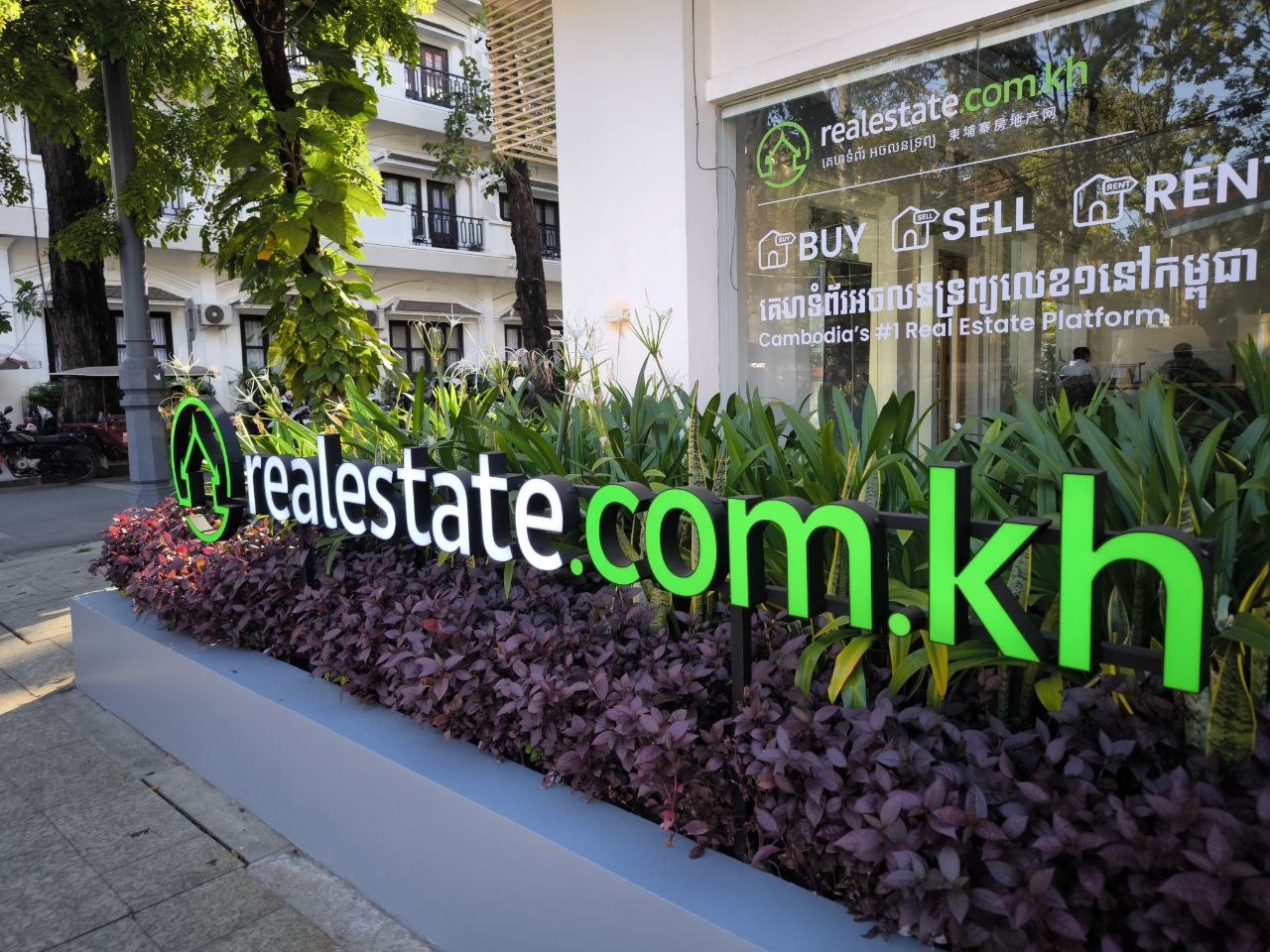
Realestate.com.kh’s expansion into Siem Reap comes at a strategically important moment.
With the opening of our new office in Siem Reap, we are positioning ourselves closer to one of Cambodia’s most dynamic transformation zones. As infrastructure improves and urban planning becomes more structured, on-the-ground insights will be critical for both local and international investors navigating the market.
READ MORE: Why Do People Choose to Invest in Cambodia?
At Realestate.com.kh, we see Smart City development as more than infrastructure. It is an early signal of where the market is heading.
Projects like these highlight where connectivity is improving, where foot traffic will expand, and where future demand is likely to emerge. With our presence now in Siem Reap, we are closely tracking these shifts to provide forward-looking insights to investors and developers.
Siem Reap’s Smart City initiative reflects a broader ambition, which is to transition from a tourism-dependent economy into a more diversified, resilient urban center.
By combining digital systems with physical infrastructure upgrades, the city is gradually redefining how people move, interact, and invest within it. For investors, the takeaway is straightforward: infrastructure-led transformation often precedes market upside. And in Siem Reap, that transformation is no longer theoretical; it is already underway.
For more information, contact us now at Realestate.com.kh, or come visit us at either our Phnom Penh or Siem Reap office!
Shop #8, Koulen Hotel, Oknha Oum Chhay Street, Mondul II Village, Svay Dangkum Commune, Siem Reap
1. What is Siem Reap Smart City Phase 2?
Answer: Siem Reap Smart City Phase 2 is the next stage of the city’s urban development plan, focused on expanding digital infrastructure, traffic systems, public services, and smart urban management from 2026 to 2028.
2. Why is Siem Reap becoming a Smart City?
Answer: Siem Reap is being developed as a model city under Cambodia’s Digital Economy and Society Policy Framework, aiming to improve livability, tourism experience, governance, and long-term economic growth.
3. How could Smart City development impact real estate in Siem Reap?
Answer: Smart City upgrades can improve infrastructure, accessibility, and public services, which often increase property demand, land values, rental appeal, and investor confidence.
4. Which areas of Siem Reap may benefit the most?
Answer: Areas near Pub Street, the riverfront corridor, emerging mixed-use zones, and locations connected to improved roads or tourism traffic may see stronger growth potential.
5. Is Siem Reap a good place to invest in property in 2026?
Answer: Yes, many investors see Siem Reap as a growing opportunity due to tourism recovery, infrastructure expansion, and relatively affordable entry prices compared to larger regional cities.
6. What types of property are in demand in Siem Reap?
Answer: Boutique hotels, serviced apartments, shophouses, commercial land, mixed-use developments, and modern residential properties are attracting growing interest.
7. How does smart infrastructure help investors?
Answer: Smart infrastructure creates better traffic flow, cleaner public spaces, stronger safety systems, and data-driven planning, all of which can improve business activity and property performance.
8. Is Siem Reap only a tourism market?
Answer: No. While tourism remains key, Siem Reap is gradually diversifying into lifestyle living, retirement demand, hospitality investment, and small business expansion.
9. What should buyers consider before investing in Siem Reap?
Answer: Buyers should review title type, zoning, infrastructure plans, rental demand, surrounding developments, and work with trusted local professionals.
10. Where can I find property opportunities in Siem Reap?
Answer: You can explore listings, market insights, and professional guidance through Realestate.com.kh, the number 1 trusted local real estate agency here in Cambodia.
ตัวเลขเหล่านี้มาจากประกาศจริงที่อัปเดตทุกวัน เริ่มค้นหาได้ที่นี่
ค้นหาบ้านทั้งหมด › How Long Does It Take to Buy Property in Cambodia? A Complete Timeline
 Overview Of Cambodian Real Estate Regulation Updates 2024
 15 Reasons to Relocate to Phnom Penh: A Guide to Living in Cambodia's Capital