
Why Do People Choose to Invest in Cambodia?
Personally writing this blog, I couldn’t help but wonder, when money has no borders, why do investors still choose Cambodia? When you finally reach that point in life where investi…
ค้นหาตามอสังหาฯ
ค้นหาตามพื้นที่
ค้นหาตามพื้นที่
Personally writing this blog, I couldn’t help but wonder, when money has no borders, why do investors still choose Cambodia? When you finally reach that point in life where investi…
Personally writing this blog, I couldn’t help but wonder, when money has no borders, why do investors still choose Cambodia?
When you finally reach that point in life where investing is no longer a dream but a real option, the world suddenly feels very small. You could put your money somewhere wonderful, like Australia, just to see kangaroos. Or Bali just to feel like a honeymoon every day. Or maybe somewhere unexpected, like Phnom Penh.
The answer, as it turns out, is not just about numbers. It’s about reasoning.
Because when people decide to invest, especially in property, they rarely do it on instinct alone. There’s a difference between what first draws us in and what ultimately convinces us to sign the SPA. And understanding that difference explains almost everything about why Cambodia continues to attract real estate investors.
🔗 50 Must-Know FAQs for Real Estate Investors in Cambodia
There are two types of reasons behind any investment decision: initial reasons and deciding reasons.
Initial reasons are emotional. They’re what make you pause and think, “What if?”
It could be your first visit to Cambodia, the warmth of the people, the pace of life, the energy of Phnom Penh at sunset. Maybe you found yourself lingering a little longer by the walk street, imagining what life could look like here one day. That emotional connection plants the seed.
But emotions alone don’t close deals.
Deciding reasons do.
Let’s say you feel the same emotional pull toward both Phnom Penh and Bali. You love them equally. But then reality enters the conversation. Your budget is between USD 40,000 and USD 60,000. You want to be in a city, not on the outskirts. You want rental potential, not just lifestyle appeal.
Suddenly, the choice becomes clearer. Phnom Penh isn’t just a feeling; it makes sense. And this is where emotion politely steps aside and lets logic take the lead.
Because once the initial spark fades, every serious investor eventually asks the same question: Does the market actually support the feeling? Attraction may start the conversation, but fundamentals are what keep it going.
So if Cambodia is more than just a place you like, it has to prove itself on paper. And that’s where the story gets interesting.
🔗 Cambodia my second home, Guide to retiring in Cambodia
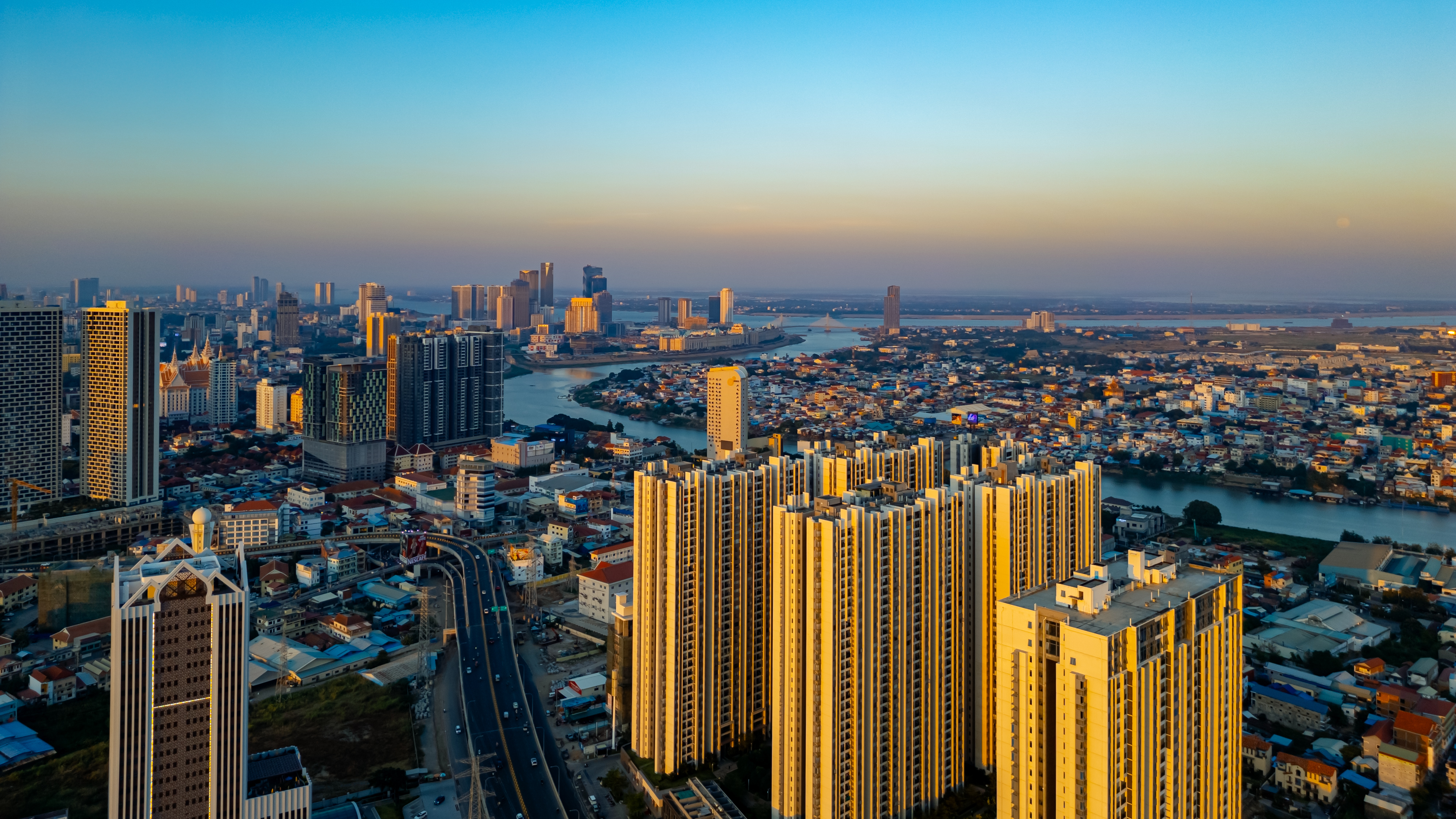
Cambodia is still categorized as a developing country, and that’s precisely why many investors see opportunity rather than risk.
The country has maintained steady economic growth, averaging around 6–7% annually in the years leading up to recent global disruptions, according to World Bank data. Phnom Penh, in particular, continues to urbanize rapidly, supported by infrastructure investment, a growing middle class, and sustained foreign business activity.
For real estate investors, this matters because growth phases are where value is created.
Property prices in Cambodia remain significantly lower than in neighboring markets like Thailand, Vietnam, or Indonesia. Yet rental demand, driven by expats, NGOs, regional professionals, and returning overseas Cambodians, remains consistent in key districts such as BKK1, Tonle Bassac, and Toul Kork.
This combination of affordability and demand forms the backbone of Cambodia’s investment appeal.
🔗 How much does a property cost in Cambodia?
To be honest, Cambodia is not a zero-risk market, and seasoned investors know that. But risk is only half the equation. The other half is returned.
Compared to more mature markets, Cambodia offers higher potential yields, particularly in the condominium segment. Gross rental yields in Phnom Penh often range between 6–8%, depending on location, building quality, and management, figures that are increasingly difficult to achieve in fully developed cities across Asia like Singapore or Japan.
Additional Reading: Emerging Giant- How Cambodia is Following in Singapore’s Footsteps
For investors who understand emerging markets, Cambodia represents a calculated risk rather than a blind one. Entry prices are still accessible, downside exposure is limited by relatively low capital outlay, and upside potential remains tied to long-term urban and economic growth.

Another deciding factor that quietly tips the scale is Cambodia’s investor-friendly tax environment.
Cambodia allows foreign ownership of strata-title properties above the ground floor, making condominium investment straightforward for international buyers. Property-related taxes remain relatively simple compared to regional alternatives, and the overall regulatory framework is designed to encourage, not discourage, foreign capital.
🔗 How much tax do you pay when buying property in Cambodia?
There are no restrictions on rental income or resale proceeds, and transaction costs remain manageable. For investors used to navigating complex tax systems elsewhere, Cambodia often feels refreshingly direct.
Perhaps the most practical deciding reason of all is market enterability.
In Phnom Penh, it is still possible to own a centrally located condominium for under USD 60,000, sometimes even less. That price point is almost unheard of in comparable capital cities across Southeast Asia. Not to mention, the market is also not very competitive at the moment with lesser well trusted developers than many developed countries in Asia.
This low barrier to entry allows first-time overseas investors to diversify without overextending themselves. It also allows seasoned investors to spread capital across multiple units rather than concentrating risk in a single asset.

People don’t invest in Cambodia just because they like it, maybe some do. But mostly, they invest because when emotion meets logic, Cambodia holds its ground.
It offers an emerging market with solid fundamentals, attractive risk-adjusted returns, favorable tax conditions, and one of the lowest entry points into capital-city real estate in the region. And this is exactly what smart investing looks like.
If you’re exploring property opportunities in Cambodia, whether as a first-time buyer or a seasoned investor, realestate.com.kh offers the most comprehensive listings, market insights, and local expertise to help you make informed decisions.
Contact us today!
ตัวเลขเหล่านี้มาจากประกาศจริงที่อัปเดตทุกวัน เริ่มค้นหาได้ที่นี่
ค้นหาบ้านทั้งหมด › How Long Does It Take to Buy Property in Cambodia? A Complete Timeline
 Overview Of Cambodian Real Estate Regulation Updates 2024
 15 Reasons to Relocate to Phnom Penh: A Guide to Living in Cambodia's Capital