Cambodia's hosting of the 20th Summit of La Francophonie in November 2026 marks an important moment in the country's efforts to strengthen its international economic relationships. Bringing together representatives from 90 member states and governments, the summit offers an opportunity to introduce Cambodia to a wider international business community, encourage investment and expand trade partnerships.
Beyond the diplomatic and cultural significance, the event has also created a platform for business networking, technology exchange and international cooperation. With French President Emmanuel Macron's state visit taking place alongside the summit, Cambodia and France signed 29 cooperation documents covering several areas, including energy, infrastructure, agriculture, technology and healthcare.
For Cambodia, these developments could support its ambitions to diversify its economy, attract international investment and strengthen its position as an emerging business destination in Southeast Asia.
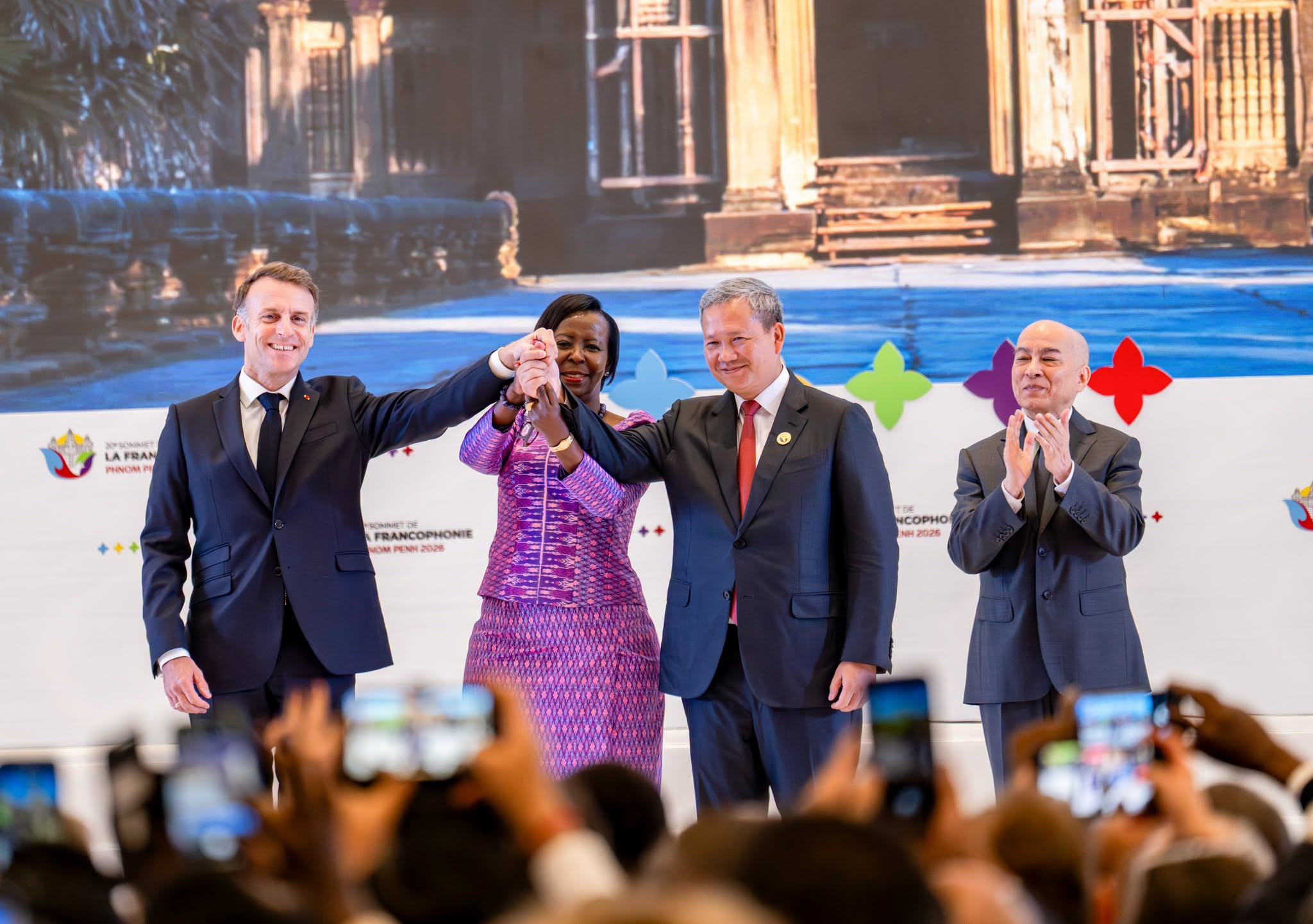
H.E. Emmanuel Macron, President of the French Republic, and Samdech Moha Borvor Thipadei Hun Manet, Prime Minister of Cambodia, raise joined hands with H.E. Louise Mushikiwabo, Secretary-General of the International Organisation of La Francophonie (OIF), as His Majesty King Norodom Sihamoni applauds at the 20th Summit of La Francophonie in Phnom Penh, (Picture Source: Organisation Internationale De La Francophonie's Official Facebook Page).
Strengthening Cambodia's International Investment Relationships
One of the most significant opportunities presented by La Francophonie 2026 is Cambodia's ability to expand its economic connections beyond its established trading and investment partners.
The International Organisation of La Francophonie (OIF) brings together countries across Europe, Africa, North America and Asia. This network offers Cambodia access to a diverse range of markets, businesses and institutions that could become future trade and investment partners.
France remains an important development partner for Cambodia, with cooperation spanning infrastructure, energy, education and other sectors. The latest state visit by President Macron further strengthened this relationship, with 29 cooperation documents signed between the two countries.
Among the agreements were a bilateral tax convention, commitments relating to a pumped-storage hydropower project, the establishment of a wholesale market and several memoranda of understanding involving public and private sectors.
These agreements provide a foundation for further collaboration, particularly in sectors that support Cambodia's economic development and infrastructure capacity.
For international businesses considering Cambodia, stronger bilateral relationships can also provide opportunities to explore partnerships, understand the local market and identify potential areas for investment.
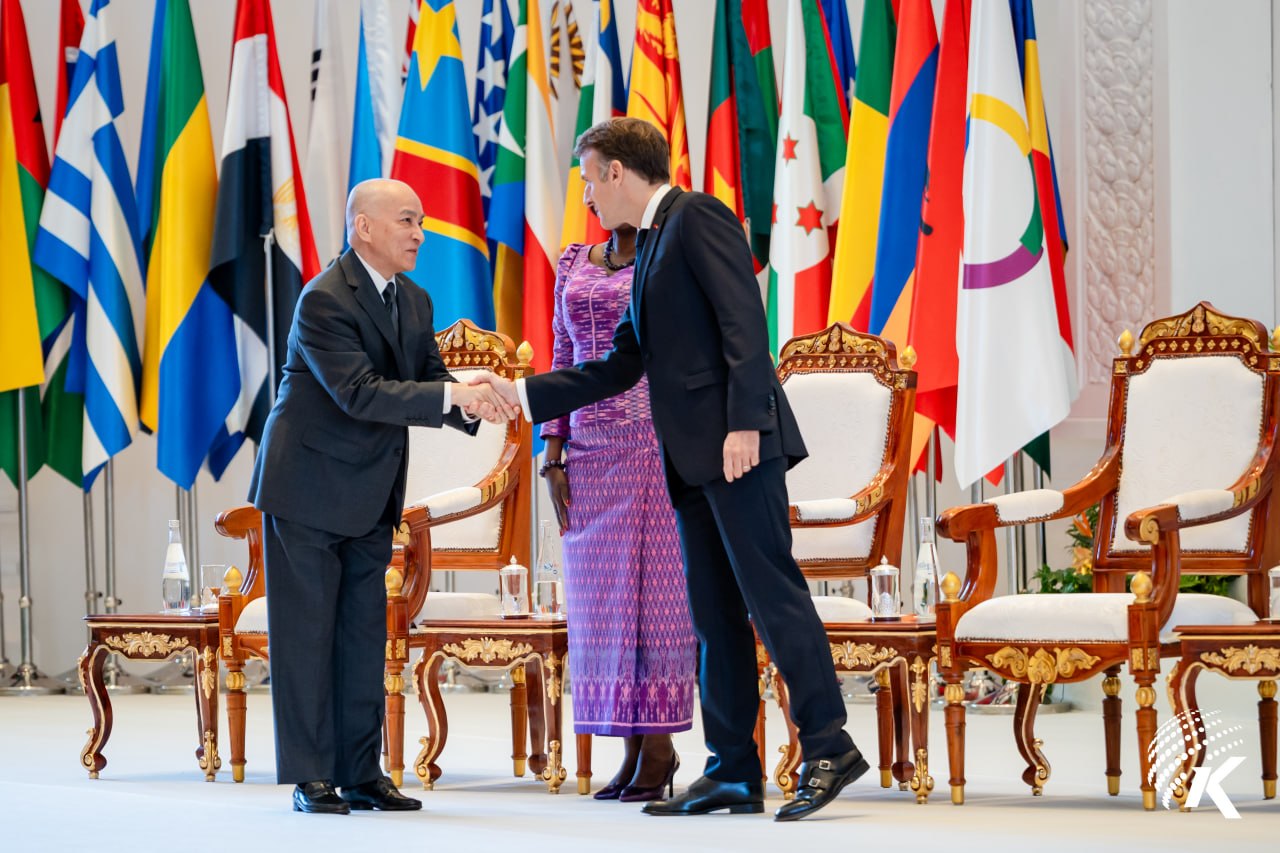
His Majesty King Norodom Sihamoni shakes hands with H.E. Emmanuel Macron, President of the French Republic, before the flags of Francophonie member states at the 20th Summit of La Francophonie in Phnom Penh, (Picture Source: Kiripost).
FrancoTech Opens Opportunities in Business and Innovation
Another important component of the summit is FrancoTech 2026, a business and innovation forum held alongside the gathering in Phnom Penh.
Under the theme of a shared digital future, the event brings together international companies, entrepreneurs, researchers and institutions to explore opportunities in technology, innovation and trade. More than 200 international exhibitors participated in the exhibition at Koh Pich.
The focus on digital transformation reflects Cambodia's ambitions to develop its digital economy and encourage greater private-sector participation in emerging industries.
Potential areas of cooperation include artificial intelligence, financial technology, digital services, renewable energy and technology-driven business solutions.
For Cambodian businesses, these platforms offer opportunities to connect with international partners, exchange expertise and explore new markets. Small and medium-sized enterprises (SMEs), in particular, could benefit from greater access to international business networks and potential commercial partnerships.
If these connections translate into practical projects, they could contribute to a more diversified business environment and create demand for supporting industries and services.
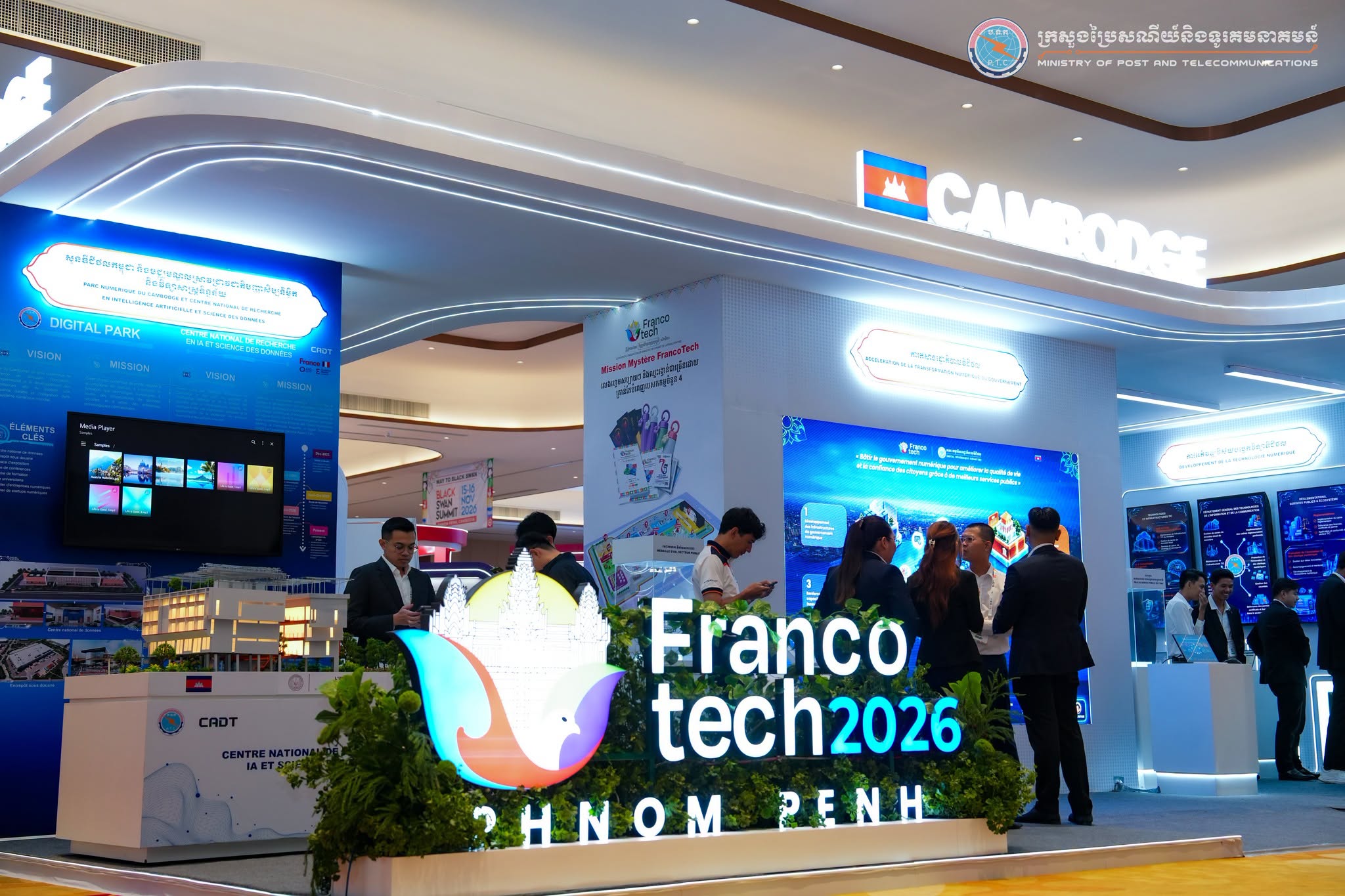
Cambodia’s pavilion at FrancoTech 2026 in Phnom Penh, presented by the Ministry of Post and Telecommunications, showcases the Cambodia Digital Park, the national AI and data science research centre, and the government’s digital transformation drive, (Picture Source: Ministry of Post and Telecommunication (MPTC)'s Official Facebook Page).
Digital Finance: Connecting Cambodia to International Markets
Beyond traditional investment and trade, La Francophonie 2026 has also highlighted Cambodia's growing ambitions in financial technology and digital connectivity.
During the Black Swan Summit Cambodia, held alongside the Francophonie gathering, the National Bank of Cambodia (NBC) announced several initiatives to extend the country's digital payment infrastructure internationally. These include plans to introduce Visa and Mastercard virtual card capabilities through Bakong, explore stablecoin-based remittances with Japan and develop cross-border payment connectivity with Rwanda.
These developments reflect Cambodia's ambition to position itself as a financial technology gateway connecting ASEAN with Francophone markets.
Cambodia's existing digital payment infrastructure provides a foundation for this expansion. In 2025, Bakong processed approximately 1.3 billion transactions worth US$241.84 billion, connecting around 38 million accounts across the country's financial ecosystem.
Greater cross-border payment connectivity could make international transactions more accessible, support trade between businesses and create new opportunities for financial cooperation. This is particularly relevant for Cambodian SMEs seeking to expand into international markets and establish relationships with overseas partners.
For international investors and businesses, an increasingly connected financial ecosystem is another important component of Cambodia's evolving investment environment. Alongside improvements in infrastructure, technology and trade relationships, digital finance could help strengthen the country's position as a regional business destination.
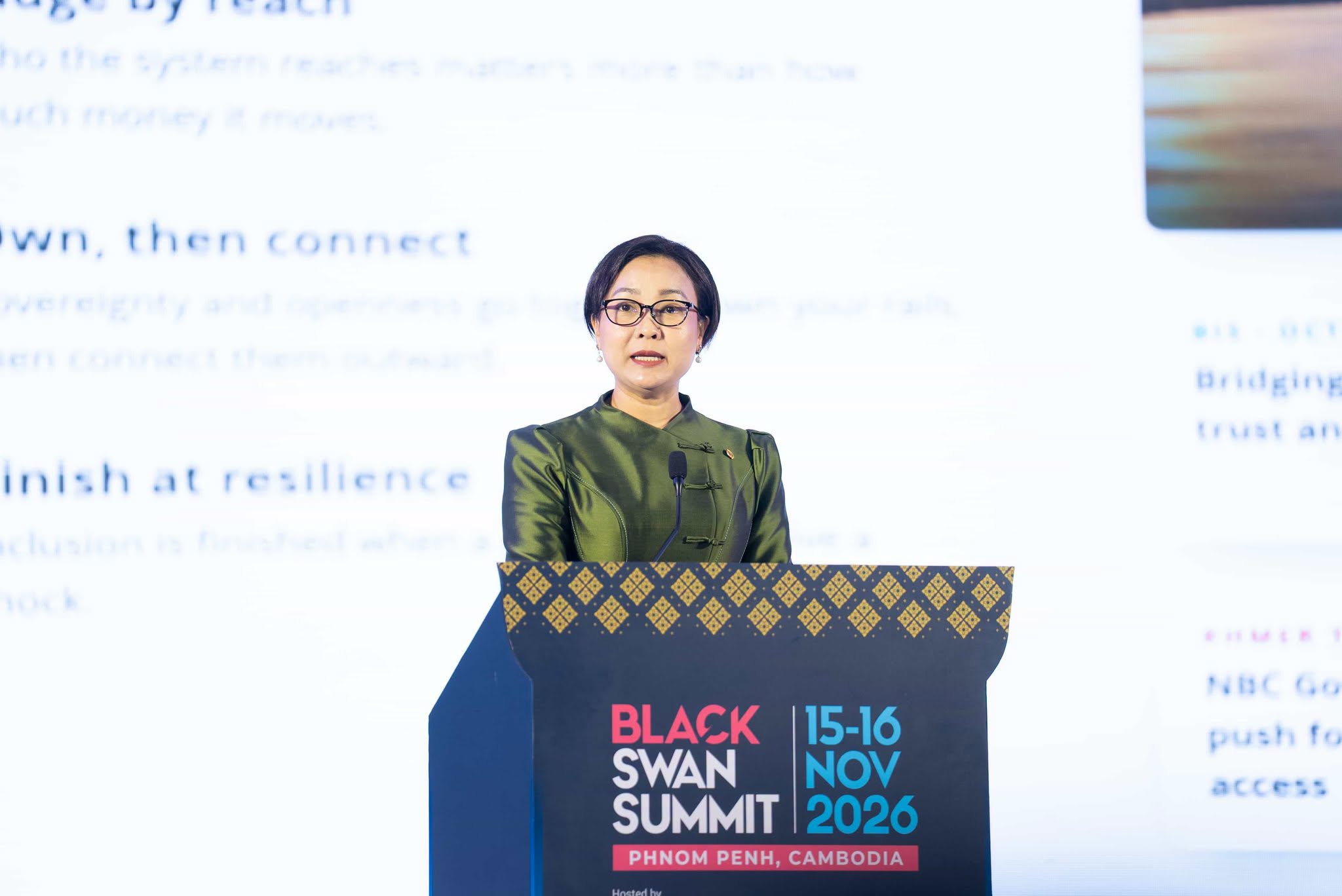
H.E. Dr. Chea Serey, Governor of the National Bank of Cambodia (NBC), speaks on financial inclusion and resilience at the Black Swan Summit 2026 in Phnom Penh, (Picture Source: Black Swan Summit's Official Facebook Page).
Infrastructure and Energy Cooperation Could Support Long-Term Growth
Investment in infrastructure and energy is another area where international cooperation could have wider economic implications.
Cambodia continues to develop its transport networks, energy capacity and logistics infrastructure to support industrial expansion, trade and urban development. Cooperation with international partners can bring additional technical expertise, financing opportunities and experience to these projects.
Among the 29 cooperation documents signed between Cambodia and France were commitments relating to a hydropower transmission and storage facility, alongside agreements covering other areas of economic cooperation.
Improved energy infrastructure is particularly important as Cambodia seeks to support manufacturing, commercial activity and future industrial development. Reliable energy supplies can also strengthen the operating environment for businesses considering establishing or expanding their presence in the Kingdom.
Similarly, improvements in transport and logistics connectivity can make emerging commercial and industrial locations more attractive to businesses.
These developments may also have longer-term implications for the property sector, particularly in areas experiencing increased economic activity and infrastructure investment.
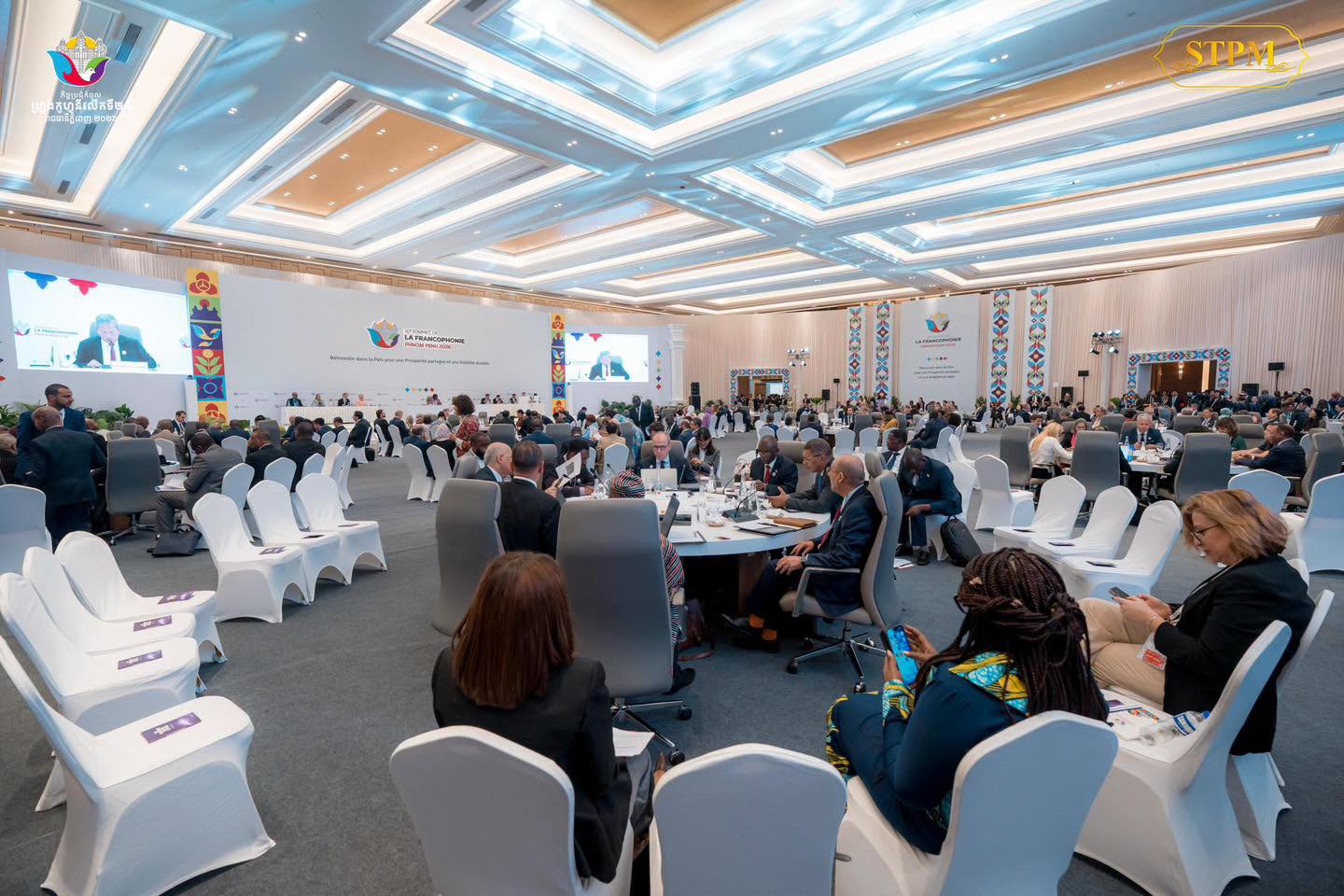
Delegates meet at roundtables during a working session of the 20th Summit of La Francophonie in Phnom Penh, (Picture Source: Organisation Internationale De La Francophonie's Official Facebook Page).
Tourism and International Exposure Could Create Further Opportunities
International events also provide Cambodia with an opportunity to promote its tourism destinations, cultural heritage and hospitality industry to a wider audience.
With international delegates, businesspeople and media representatives visiting the Kingdom, the summit has helped showcase Cambodia beyond its traditional tourism image.
Phnom Penh, as the country's main business centre, offers opportunities in hospitality, commercial property and business accommodation. Meanwhile, Siem Reap's established tourism industry and proximity to Angkor Wat continue to create opportunities for hotels, serviced accommodation and tourism-related businesses.
Cambodia's coastal destinations, including Sihanoukville, also offer potential for hospitality and tourism development.
Greater international exposure could help strengthen the country's destination image and encourage future partnerships between local tourism operators and international businesses.
What Could This Mean for Cambodia's Real Estate Sector?
As Cambodia strengthens its international business relationships, the property sector could benefit from the wider economic activity generated by new investment and commercial partnerships.
Foreign companies entering the Cambodian market may require office spaces, commercial premises, industrial facilities and accommodation for employees. Meanwhile, growth in tourism and international business activity could support demand for hotels, serviced apartments and other hospitality-related properties.
Phnom Penh, as the country's main business centre, could benefit from increased demand for commercial and residential accommodation as international business connections develop.
Meanwhile, destinations such as Siem Reap and Sihanoukville may find opportunities through tourism-related investment, hospitality development, improvements in connectivity and through the development of many special economic zones (SEZs) as well.
Infrastructure development can also influence the attractiveness of different locations. As accessibility and supporting facilities improve, areas outside established business districts may become more appealing for future commercial and residential projects.
For investors exploring the Kingdom, understanding these broader economic developments is an important part of assessing the country's property market. Realestate.com.kh's Cambodia Investment Guide provides an overview of the country's economy, property market, investment framework and key locations.
International buyers can also explore the latest Cambodia Condo Investment Guide 2026 for updated insights into condominium market conditions and foreign ownership considerations.
Turning International Connections into Long-Term Opportunities
While hosting La Francophonie 2026 has increased Cambodia's international visibility, the longer-term economic benefits will depend on what follows the event.
Signed cooperation documents, business networking and international exhibitions provide a starting point, but their real value will be measured by the projects, investments and partnerships that emerge over time.
For Cambodia, the opportunity extends beyond strengthening its relationship with France. It is also about building connections with a wider international business community, attracting new expertise and supporting the development of industries that contribute to long-term economic growth.
For the real estate sector, these developments offer another reason to monitor Cambodia's evolving investment landscape. As the country's business environment, infrastructure and international connectivity continue to develop, they could help shape future demand across residential, commercial and industrial property.
Ultimately, La Francophonie 2026 is more than an international gathering. It is an opportunity for Cambodia to turn global connections into practical economic partnerships and support its next stage of development.